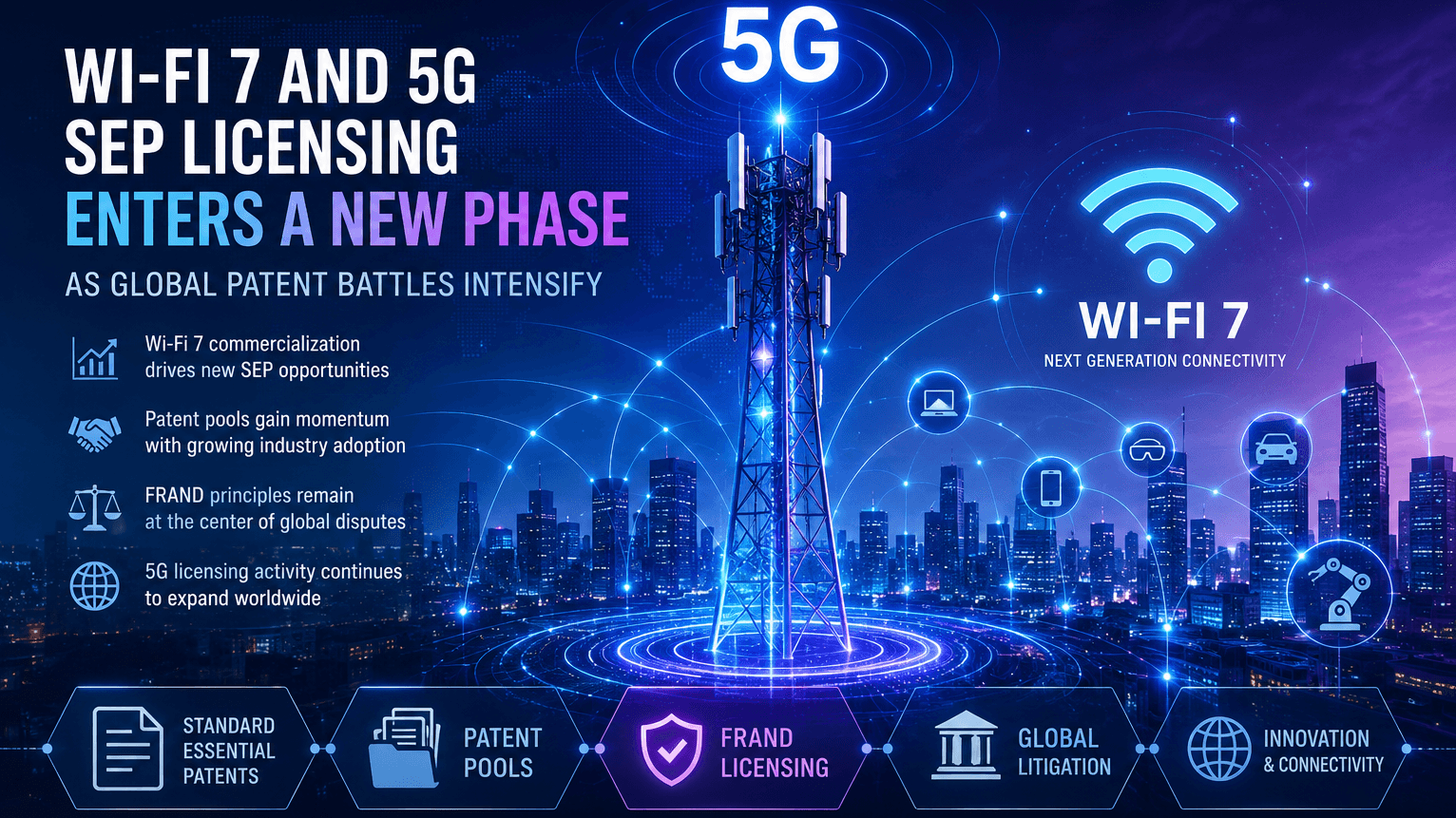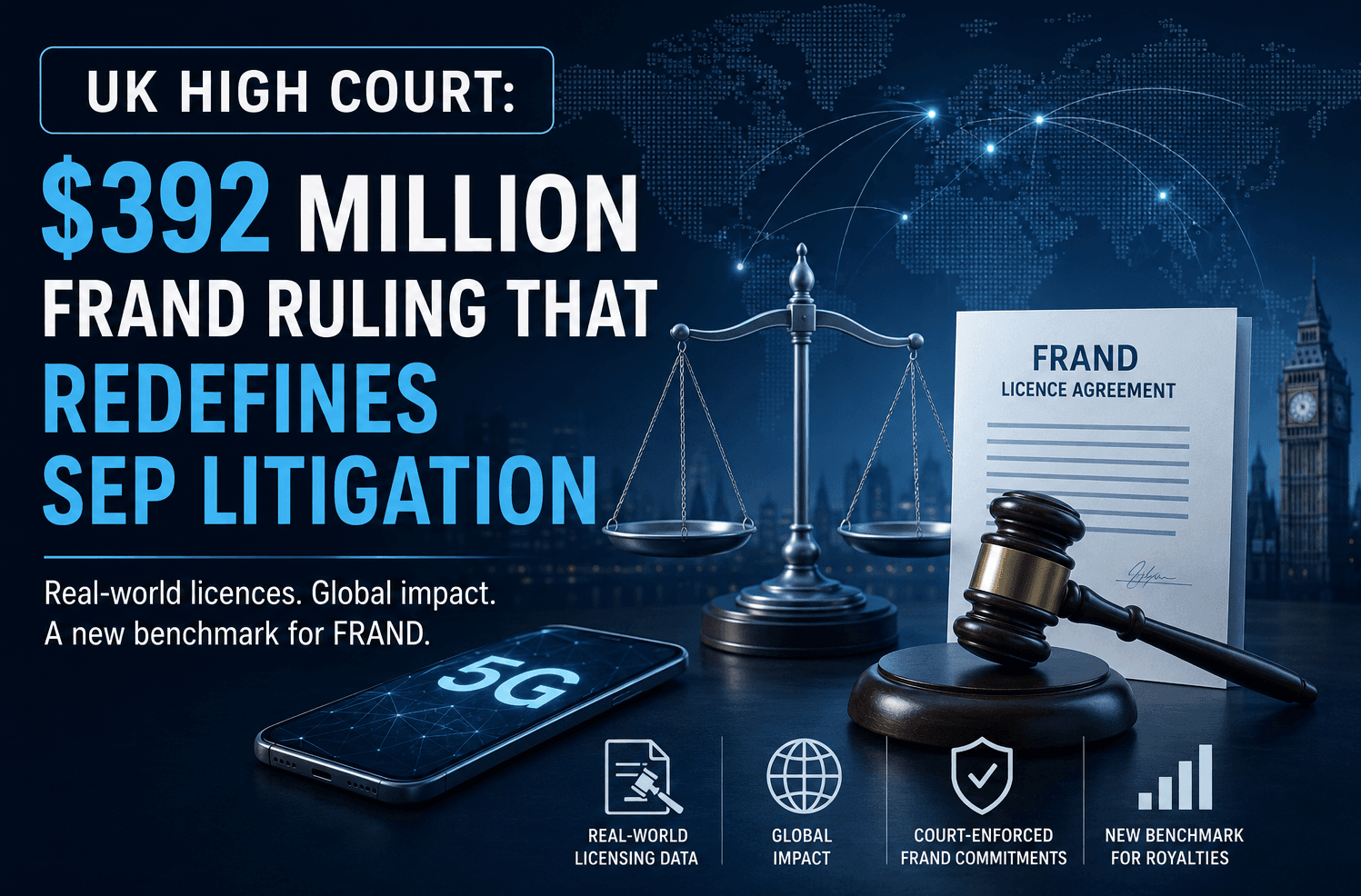
The rapid deployment of 5G networks and the concurrent expansion of the Internet of Things (IoT) have catalyzed an era of mass digital transformation. However, with well over 100,000 published patent families declared essential to 5G globally by 2026, the licensing landscape has never been more complex. At the core of this technical and legal ecosystem are Standard Essential Patents (SEPs) and the fundamental commitment to license them on Fair, Reasonable, and Non-Discriminatory (FRAND) terms.
The Core of FRAND Commitments
Standard-setting organizations (SSOs), such as ETSI, require patent holders to agree to FRAND licensing to prevent monopolistic gridlock. This framework is designed to balance two competing interests:
1. Preventing Patent Hold-Up: Ensuring SEP owners cannot use their critical patents to demand exorbitant, anti-competitive royalty rates from implementers who are locked into the 5G standard.
2. Preventing Patent Hold-Out: Safeguarding innovators against implementers who delay negotiations in bad faith or refuse to pay fair royalties while already commercializing the standardized technology.
In the 5G era, however, arriving at what is universally "fair" and "reasonable" remains an evolving challenge, frequently resulting in drawn-out, cross-border litigation.
Key Challenges in 5G FRAND Licensing
As 5G extends far beyond mobile handsets—integrating deeply into automotive, consumer electronics, and smart city infrastructure several friction points have come to define modern FRAND disputes:
The Over-Declaration Problem: A significant portion of patents declared as "essential" to 5G standards do not actually map perfectly to the core specifications when subjected to rigorous scrutiny. This inflates perceived portfolio strength and complicates rate-setting.
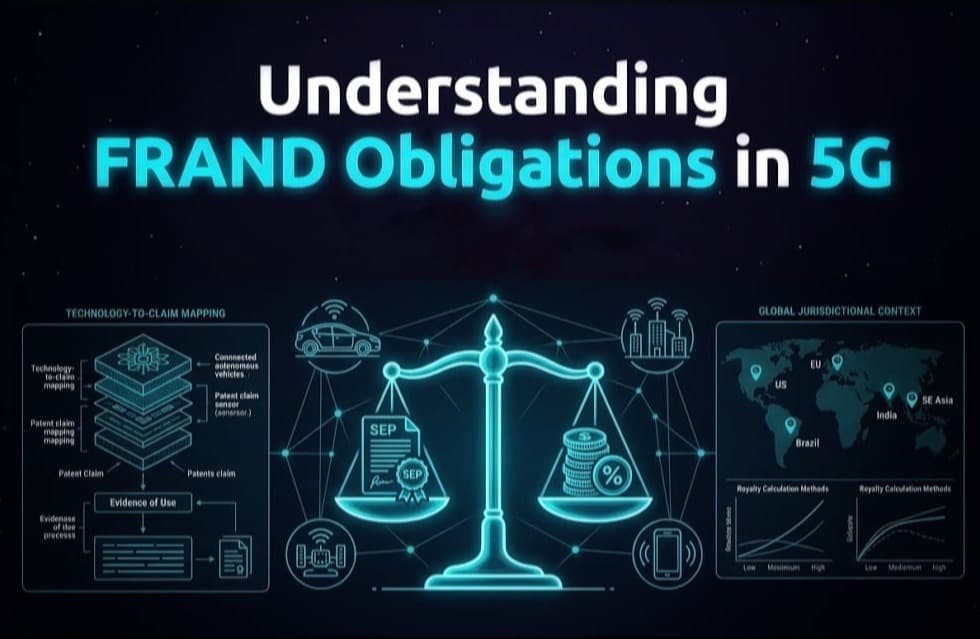
Royalty Base Disputes: The debate continues over whether royalties should be calculated based on the smallest saleable patent-practicing unit (SSPPU), such as a 5G baseband chip, or the overall value of the end-product (such as a fully connected autonomous vehicle).
Global Jurisdictional Battles: Implementers and licensors frequently race to preferred judicial venues to set global FRAND rates. Recent 2025 and 2026 trends highlight intense activity not just in traditional hotspots like the U.S. (Eastern District of Texas) and the EU, but also a surge of connected-car and SEP litigation in emerging battlegrounds like Brazil, alongside rapidly evolving IP enforcement frameworks in India and Southeast Asia.
Strategic Imperatives for Licensors and Implementers
Relying solely on high-level standard declarations is no longer sufficient for navigating 5G FRAND negotiations. Success in modern SEP licensing and litigation requires granular, unassailable technical analysis.
Robust Claim-to-Product Mapping: To validate true essentiality, it is critical to develop highly detailed Evidence of Use (EoU) claim charts. Proving that a product strictly infringes a claim—or, conversely, proving a declared claim does not actually cover the mandatory standard specification—is the bedrock of an effective FRAND position.
Targeted Invalidity Searches: Because the 5G SEP landscape is heavily saturated, challenging the validity of a declared SEP through deep-dive prior art research and infringement mining is a highly effective strategy for implementers seeking to negotiate balanced licensing terms.
Good Faith Negotiation Protocols: Courts worldwide are increasingly penalizing parties that fail to negotiate transparently. Armed with multidisciplinary technical evidence, parties can present credible royalty models and technical counter-offers that satisfy judicial standards for "good faith."
Conclusion
As 5G continues to scale across industries, the interpretation and enforcement of FRAND obligations will dictate the economic realities of technology adoption. Navigating this landscape requires more than just legal posturing; it demands uncompromising technical precision. Whether monetizing an SEP portfolio or defending against an assertion campaign, leveraging multidisciplinary techno-legal analysis and litigation-level claim charts is the most reliable way to secure clarity in a high-stakes environment.