Wi-Fi 7 and 5G SEP Licensing Enters a New Phase as Global Patent Battles Intensify
May 2026 | Intellectual Property Insight
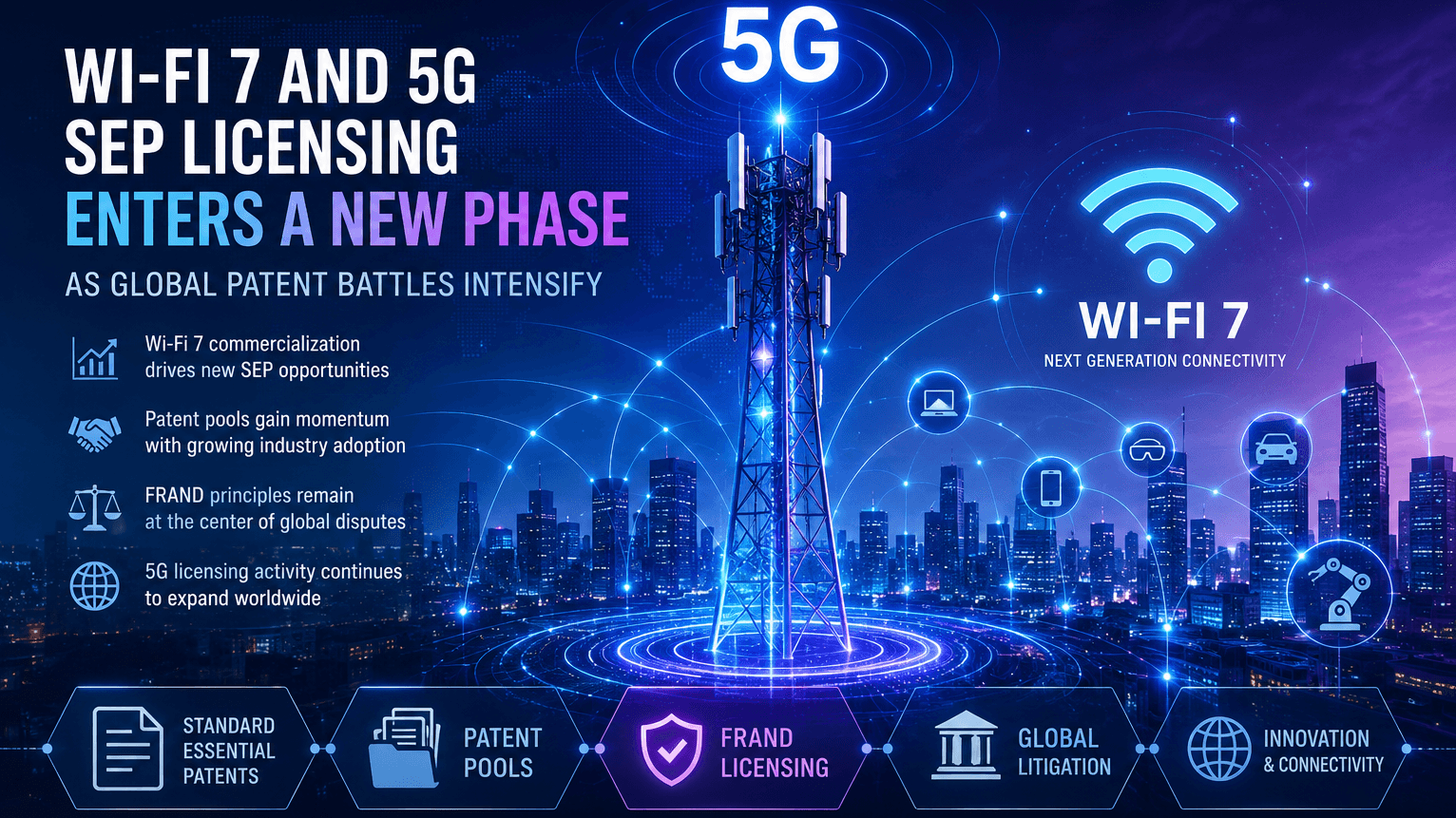
The global market for Standard Essential Patents (SEPs) is entering a critical new phase as Wi-Fi 7 deployment accelerates and 5G licensing disputes continue to reshape the technology ecosystem. Recent developments indicate that patent holders, implementers, and licensing pools are positioning themselves for a more aggressive and structured licensing environment.
Wi-Fi 7 Becomes the Next SEP Battleground
Following the publication of the IEEE 802.11be standard and the expansion of commercial Wi-Fi 7 products, patent activity surrounding next-generation wireless connectivity has increased substantially. Industry studies show that thousands of patent families are now being evaluated for Wi-Fi 7 essentiality, while licensing programs are beginning to establish royalty frameworks for device manufacturers.
Several major technology companies, including Huawei, LG Electronics, Intel, Qualcomm, and MediaTek, are widely recognized as key contributors to the Wi-Fi patent landscape. As commercialization expands across smartphones, enterprise networking equipment, IoT devices, and industrial systems, ownership of strong SEP portfolios is becoming a significant competitive advantage.
Patent Pools Gain Momentum
One of the most notable trends in 2026 is the expansion of patent pool licensing programs covering Wi-Fi 6 and Wi-Fi 7 technologies. Patent pools are increasingly viewed as a practical solution for reducing licensing complexity and mitigating litigation risks.
Recent licensing agreements involving companies such as ASUS, Lenovo, LG Electronics, and other technology manufacturers demonstrate growing industry acceptance of pooled licensing models. These arrangements provide implementers with streamlined access to essential technologies while offering patent owners a structured pathway for monetization.
FRAND Remains at the Center of Global Disputes
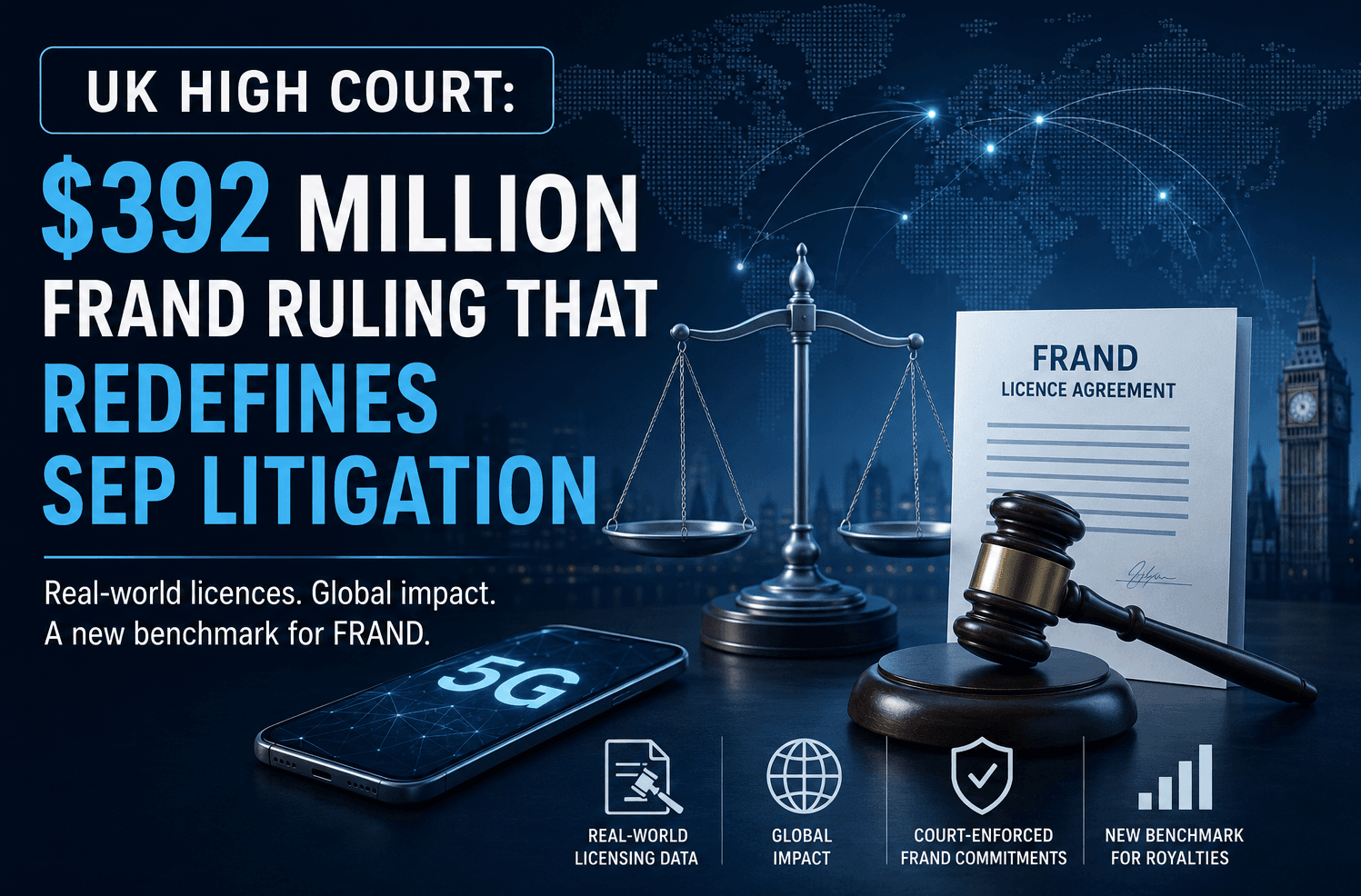
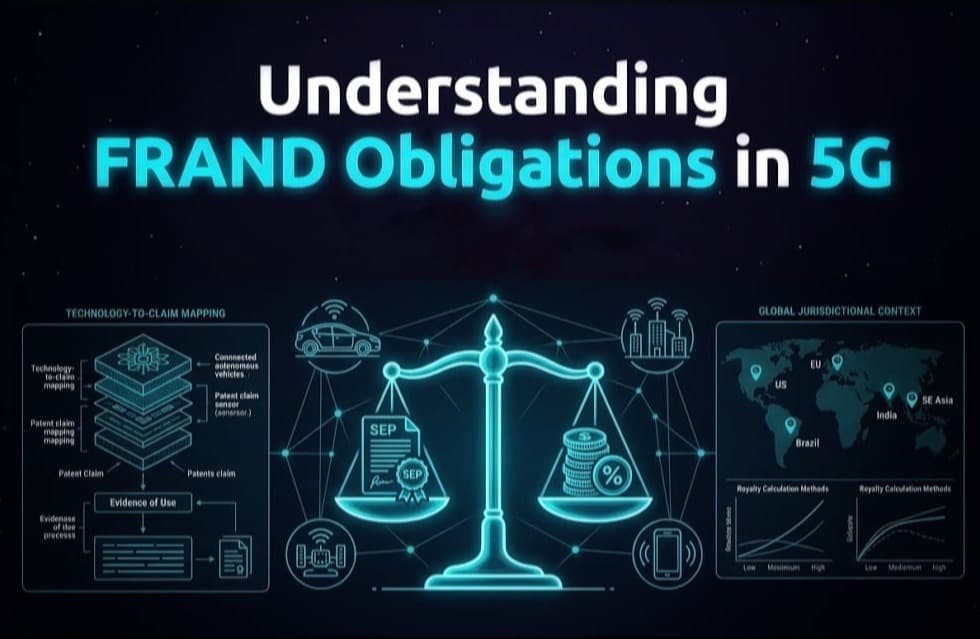
The principle of Fair, Reasonable and Non-Discriminatory (FRAND) licensing continues to be the foundation of SEP negotiations. However, disagreements over royalty rates, portfolio valuation, and jurisdictional authority remain common.
Courts and regulators across Europe, Asia, and the United States are increasingly being asked to determine how FRAND obligations should be interpreted in a rapidly evolving technology landscape. Questions surrounding global rate setting, injunction rights, and cross-border enforcement remain highly contested.
For both licensors and implementers, the challenge lies in balancing innovation incentives with broad market access to standardized technologies.
5G Licensing Activity Shows No Signs of Slowing
Alongside Wi-Fi 7 developments, 5G SEP litigation continues to expand globally. Major smartphone manufacturers and telecommunications companies remain engaged in licensing negotiations and court proceedings across multiple jurisdictions.
As 5G infrastructure deployment deepens and advanced applications such as connected vehicles, industrial automation, and AI-enabled devices become more widespread, the commercial value of 5G SEP portfolios is expected to grow significantly.
Industry observers anticipate that future disputes will increasingly involve not only traditional smartphone manufacturers but also emerging sectors integrating cellular connectivity into their products.
Looking Ahead
The convergence of Wi-Fi 7 commercialization, expanding patent pool activity, and ongoing 5G licensing disputes signals a new era for SEP enforcement and monetization.
For technology companies, understanding SEP exposure, evaluating licensing obligations, and developing robust intellectual property strategies will be essential. As wireless standards continue to evolve, the importance of transparent FRAND licensing practices and efficient dispute resolution mechanisms will only increase.
The next 12 months are expected to be pivotal for both patent holders and implementers as the global wireless ecosystem transitions into its next generation of connectivity.