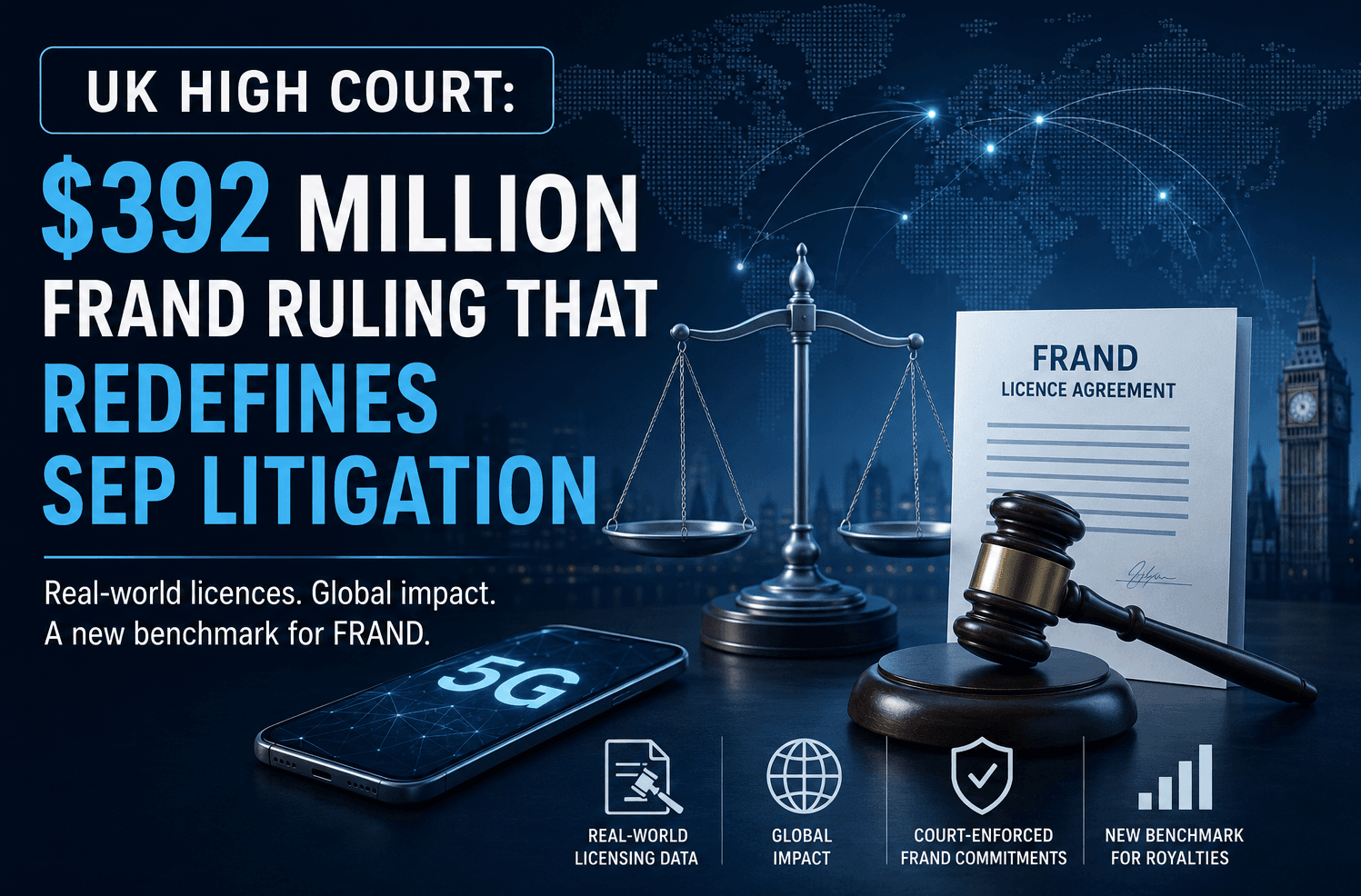
The $392 million figure is significant not just in absolute terms, but in methodology. By declining the top-down approach and instead anchoring his analysis to the ZTE-Apple 2020 licence as a reference deal, Judge Meade has sent a clear signal about the weight given to real-world out-licensing data in FRAND determination.
For patent holders assembling SEP portfolios — whether for 4G, 5G, or emerging 6G standards — this case reinforces the critical importance of documenting every out-licensing deal meticulously. Each licence agreement becomes potential ammunition in future FRAND proceedings. Every licence you execute can become your benchmark in future disputes.
Our SEP claim chart services help portfolio holders build the evidentiary record needed to support favourable FRAND rates.
For implementers such as device manufacturers and network operators, the Samsung vs ZTE case demonstrates that courts are actively scrutinising and enforcing FRAND commitments even at the highest values. Implementers who assumed FRAND licensing disputes were merely tactical delays now face concrete court-determined royalty obligations.
Conducting a thorough freedom-to-operate analysis for every standard-essential patent in your product’s technology stack is no longer optional — it is now a prerequisite for managing litigation exposure.
Our freedom-to-operate and IP due diligence services help companies map their exposure before it becomes a $392 million problem.
The multi-jurisdictional dimension is a major practical challenge. With litigation running simultaneously in the UK, Germany, China, Brazil, and before the UPC, a single-jurisdiction strategy is insufficient. Coordinated global portfolio defence — including prior art searches, claim charts, and invalidity opinions across all relevant jurisdictions — is now the standard of practice.
Key Takeaways:
- Anchor your SEP licensing strategy to real-world data now. Judge Meade’s selection of the ZTE-Apple 2020 licence as the reference deal shows courts will ground FRAND rates in actual out-licensing agreements. Build a rigorous licensing record early and document every licence negotiation.
- Multi-jurisdictional SEP strategy is non-negotiable. With litigation across at least six jurisdictions, coordinated global portfolio defence is now the standard of practice. Prior art searches, claim charts, and invalidity opinions must be jurisdiction-aware.
- FRAND objections in German courts are still viable but narrowed. The Munich court’s rejection of Samsung’s FRAND defence demonstrates that implementers cannot rely on FRAND objections alone to defeat injunctions. Parallel nullity proceedings and security deposit strategies are now essential complements.
- Monitor the form of order hearing and potential appeal. The UK ruling is not yet enforceable. Both parties may seek leave to appeal. Monitor developments closely — an appeal could shift the $392 million figure materially.
- Assess your portfolio’s exposure across 4G and 5G SEPs now. If your company manufactures or sells connected devices, audit your SEP exposure. Are your FRAND commitments documented? Have you conducted freedom-to-operate analyses for all standards-essential patents? Our IP services team can help map and manage that exposure.
Conclusion:
The UK High Court’s $392 million FRAND ruling in Samsung vs ZTE is more than a record-breaking royalty figure — it is a methodological landmark in global SEP litigation. By anchoring the rate to real-world licensing data, declining the top-down method, and critiquing the systemic dysfunction of multi-jurisdictional ETSI disputes, Judge Meade has delivered a ruling that will be studied by SEP practitioners worldwide for years to come.